Finding the best zero turn mower for small acreage comes down to matching the right deck size, engine, and budget to your yard — and skipping the machines that are overkill or underbuilt for 1–3 acres. If you’re still using a riding mower or garden tractor on that kind of property, you’re losing 20–30 minutes every time you mow. A zero-turn on a 2-acre yard cuts that time nearly in half.
We’ve sold a lot of these. For most buyers with 1–3 flat acres, the answer is the Husqvarna Z254 — the other machines on this list are worth knowing about, but the Z254 is where most people land and don’t regret it. The rest of this guide explains why, and when a different machine makes more sense.
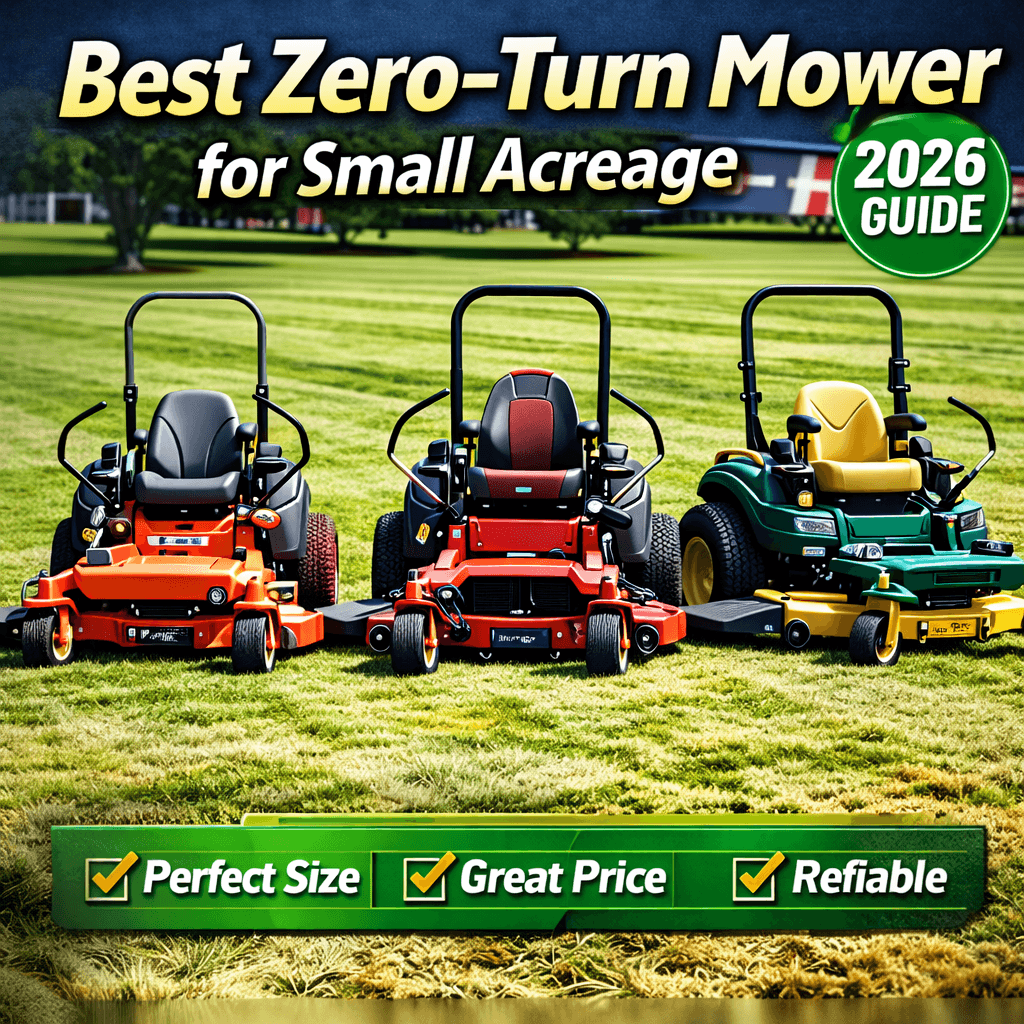
What “Small Acreage” Actually Means for a Zero-Turn
When people say small acreage, they usually mean 1–3 acres. That’s the sweet spot where a zero-turn makes the most sense — big enough that mowing time actually matters, small enough that you don’t need a commercial machine.
For under an acre, a zero-turn is overkill. A self-propelled walk-behind or a basic riding mower does the job without the cost or storage footprint. For over 3 acres, you start looking at larger deck sizes or stepping up to a commercial machine.
In the 1–3 acre range, here’s what matters most:
- Deck size: 48″–54″ covers ground efficiently without being unwieldy around trees and garden beds
- Engine HP: 22–26 HP handles normal residential grass without straining
- Transmission: Hydrostatic is standard — the quality varies by model, which matters over time
- Weight: Lighter machines are easier on turf, especially in wet conditions
The Best Zero Turn Mowers for Small Acreage in 2026
🥇 1. Husqvarna Z254 — Best Overall for 1–3 Acres
The Z254 is the machine we recommend most often for 1–3 acres. The 54″ fabricated deck and 26 HP Kohler 7000 Series engine cut through normal residential grass cleanly at speed — on a flat 2-acre yard with a few trees, most users are done in 45–55 minutes. On an acre, closer to 30.
What separates the Z254 from cheaper alternatives isn’t one feature — it’s the package. The Kohler 7000 Series engine is one of the most widely serviced small engines in the US, the deck is fabricated rather than stamped, and Husqvarna’s dealer network makes parts straightforward to find. A 3–4 year old Z254 with reasonable hours is still a machine worth buying.
The one real limitation: slopes above 15°. Zero-turns lose traction on steep grades and the Z254 is no exception. Hilly yard? Look at the Cub Cadet XT1 instead.
- Deck: 54″ fabricated steel
- Engine: 26 HP Kohler 7000 Series
- Best for: 1–3 acres, flat to gently sloping
- New price: ~$2,799–$3,199
- Used from: ~$2,200
👉 View Husqvarna Z254 listing — new and used available →
🥈 2. Toro TimeCutter — Best for Operator Comfort
The TimeCutter is the Z254’s closest competitor for small acreage. The specs are comparable — 22–24.5 HP, 42″–75″ deck range — but the standout feature is the MyRIDE suspension system on select models. If you mow for an hour or more and feel it in your back, the MyRIDE genuinely makes a difference. It’s the one feature that regularly comes up in feedback from buyers who’ve had both machines.
Toro also offers more deck size flexibility than Husqvarna at this price point. The 50″ is the most popular configuration for 1–2 acres. The 60″–75″ options make more sense for 3–5 acres.
The transmission on the base TimeCutter is slightly lighter than on the Z254, which shows up over years of use. Not a dealbreaker for residential use — just worth knowing.
- Deck: 42″–75″ (most popular for small acreage: 50″)
- Engine: 22–24.5 HP Kawasaki or Kohler
- Best for: 1–3 acres, buyers who mow for extended periods
- New price: ~$2,600–$3,500
- Used from: ~$2,000
👉 View Toro TimeCutter listing →
🥉 3. Ariens IKON XD — Best Specs Under $4,000
The IKON XD is what you buy when you’ve compared the Z254 and TimeCutter and felt like both were a bit light on hardware. The fabricated deck is the same construction method as commercial machines, and the Hydro-Gear ZT-2800 transmission is a step up from the EZT units on the Husqvarna and Toro at this price.
It’s heavier — 620–680 lbs versus around 590 for the Z254 — and the Ariens used market isn’t as liquid as John Deere or Husqvarna. But if you’re keeping the machine and want more for your money, the IKON XD delivers it.
- Deck: 42″–52″ fabricated steel
- Engine: 23–25 HP Kawasaki or Kohler
- Best for: 1–3 acres, buyers who want stronger hardware
- New price: ~$2,800–$3,800
- Used from: ~$2,000
👉 View Ariens IKON XD listing →
4. John Deere Z300 Series — Best Resale Value
The John Deere Z300 series costs more than the Husqvarna and Toro equivalents — $3,200–$4,200 new — but it holds its value better than any residential zero-turn on the market. Based on used listings on platforms like TractorHouse, JD residential zero-turns often retain 60–70% of new value at 3–4 years old. That’s meaningfully higher than most alternatives.
The Accel Deep™ deck also produces a notably clean cut finish, particularly on the 48″ and 54″ configurations. If you care about how the lawn looks after, not just how fast it’s done, the Z300 is worth the premium.
- Deck: 42″–54″ Accel Deep™
- Engine: 22–25 HP
- Best for: 1–3 acres, buyers who plan to resell
- New price: ~$3,200–$4,200
- Used from: ~$2,500
👉 View John Deere Z300 listing →
Side-by-Side Comparison
| Model | Deck | Engine | New Price | Best For |
|---|---|---|---|---|
| Husqvarna Z254 | 54″ | 26 HP Kohler | $2,799–$3,199 | Best overall — 1–3 acres |
| Toro TimeCutter | 42″–75″ | 22–24.5 HP | $2,600–$3,500 | Operator comfort, longer sessions |
| Ariens IKON XD | 42″–52″ | 23–25 HP | $2,800–$3,800 | Best hardware under $4,000 |
| John Deere Z300 | 42″–54″ | 22–25 HP | $3,200–$4,200 | Best resale value |
Zero-Turn vs Garden Tractor — Which Makes More Sense?
For 1–3 acres on mostly flat ground, a zero-turn wins on time every time. Garden tractors and riding mowers with traditional steering have larger turning circles — which means more passes around obstacles, more backing up, and more time per session. On a 2-acre yard with a dozen trees, a zero-turn saves a meaningful amount of mowing time per session.
The exceptions: slopes above 15°, very tight spaces, or buyers who find lap-bar steering uncomfortable. For those situations, a garden tractor or rear-wheel drive riding mower is the safer and often more practical choice. This guide focuses on the zero-turn side — for ride-on mower alternatives suited to hills, see our Cub Cadet XT1 guide.
What Size Zero-Turn Do You Need?
| Yard Size | Recommended Deck | Best Pick |
|---|---|---|
| Under 1 acre | 42″–48″ | Toro TimeCutter 42″ or Ariens IKON XD 42″ |
| 1–2 acres | 48″–54″ | Husqvarna Z254 or Toro TimeCutter 50″ |
| 2–3 acres | 54″ | Husqvarna Z254 — best at this range |
| Over 3 acres | 54″–60″+ | Ariens IKON XD 52″ or step up to commercial |
New vs Used — What’s the Right Call?
For small acreage, a quality used zero-turn is often the smartest purchase. A 2–3 year old Husqvarna Z254 or Toro TimeCutter in good condition cuts identically to a new one — and you’re paying $600–$1,000 less. The machines are durable enough that buying used doesn’t mean buying a problem.
Key checks before buying used: deck condition (look for cracks, especially near the spindles), belt wear, hydrostatic transmission smoothness at both slow and fast speeds, and engine oil condition. Always test drive before committing.
If you’re buying new, the Z254 is the strongest value new — the 26 HP Kohler and fabricated deck at $2,799 is hard to beat in the residential segment. The TimeCutter is the better choice if you want the MyRIDE suspension. The Z300 is the better choice if resale matters.
Who Should Skip a Zero-Turn Altogether
Zero-turns are not the right machine for everyone:
- Hilly yards above 15° — zero-turns lose traction on steep slopes and can be unsafe. A rear-wheel drive riding mower like the Cub Cadet XT1 handles slopes significantly better
- Yards under 0.5 acres — the machine is more than you need. A self-propelled walk-behind is faster to get in and out of storage and covers small yards just as quickly
- First-time riders uncomfortable with lap-bar steering — there’s a learning curve. The Toro TimeCutter with Smart Speed helps, but if the idea of zero-turn steering is intimidating, start with a riding mower
Verdict
For 1–3 acres on flat to gently sloping ground, the Husqvarna Z254 is the best zero-turn mower for small acreage in 2026 — not because the others are bad, but because it hits the right combination of deck size, engine quality, and dealer support at a price most buyers can justify. If you mow for an hour or more and your back knows it, get the Toro TimeCutter with MyRIDE instead. If you’ll sell the machine in a few years, buy the John Deere. For everyone else: the Z254.
👉 View Husqvarna Z254 — new and used available →
👉 Browse all lawn mowers for sale →
Related Pages
- 🛒 Husqvarna Z254 for Sale — Best Zero-Turn for 1–3 Acres
- 🛒 Toro TimeCutter for Sale — Best for Operator Comfort
- 🛒 Ariens IKON XD for Sale — Best Specs Under $4,000
- 🛒 John Deere Z300 for Sale — Best Resale Value
- 🛒 Cub Cadet XT1 for Sale — Best for Hills
- 📖 Husqvarna Z254 vs Toro TimeCutter — Full Comparison
- 📖 Is the Husqvarna Z254 Worth It?
- 📖 Best Riding Lawn Mower for Hills
Frequently Asked Questions
What is the best zero-turn mower for 1 acre?
The Husqvarna Z254 or Toro TimeCutter 50″ are the strongest choices for 1 acre. Both handle the job in 30–40 minutes depending on conditions, have wide dealer support, and hold their value reasonably well on the used market.
Is a zero-turn mower worth it for small acreage?
For 1 acre and above — yes. The time saving over a comparable riding mower is real, typically 30–50% faster on the same property. Under an acre, it’s harder to justify the cost difference.
What is the best zero-turn mower under $3,000?
The Husqvarna Z254 at ~$2,799 new is the strongest option under $3,000 in 2026. Used TimeCutters and IKON XDs in the $2,000–$2,800 range are also worth considering if budget is the main factor.
How long does a zero-turn mower last?
A well-maintained residential zero-turn from a reputable brand typically runs 500–1,500 hours before needing significant work. That’s 10–20+ years for a homeowner mowing once a week through a typical mowing season. The key variables are belt changes on schedule, keeping the deck clean, and not running the engine hard in thick wet grass.
Can a zero-turn mower handle hills?
Gently sloping terrain up to about 15° is manageable on most residential zero-turns. Above that, traction becomes unpredictable and most manufacturers don’t recommend operation on steeper grades. For genuinely hilly yards, a rear-wheel drive riding mower is the safer choice.