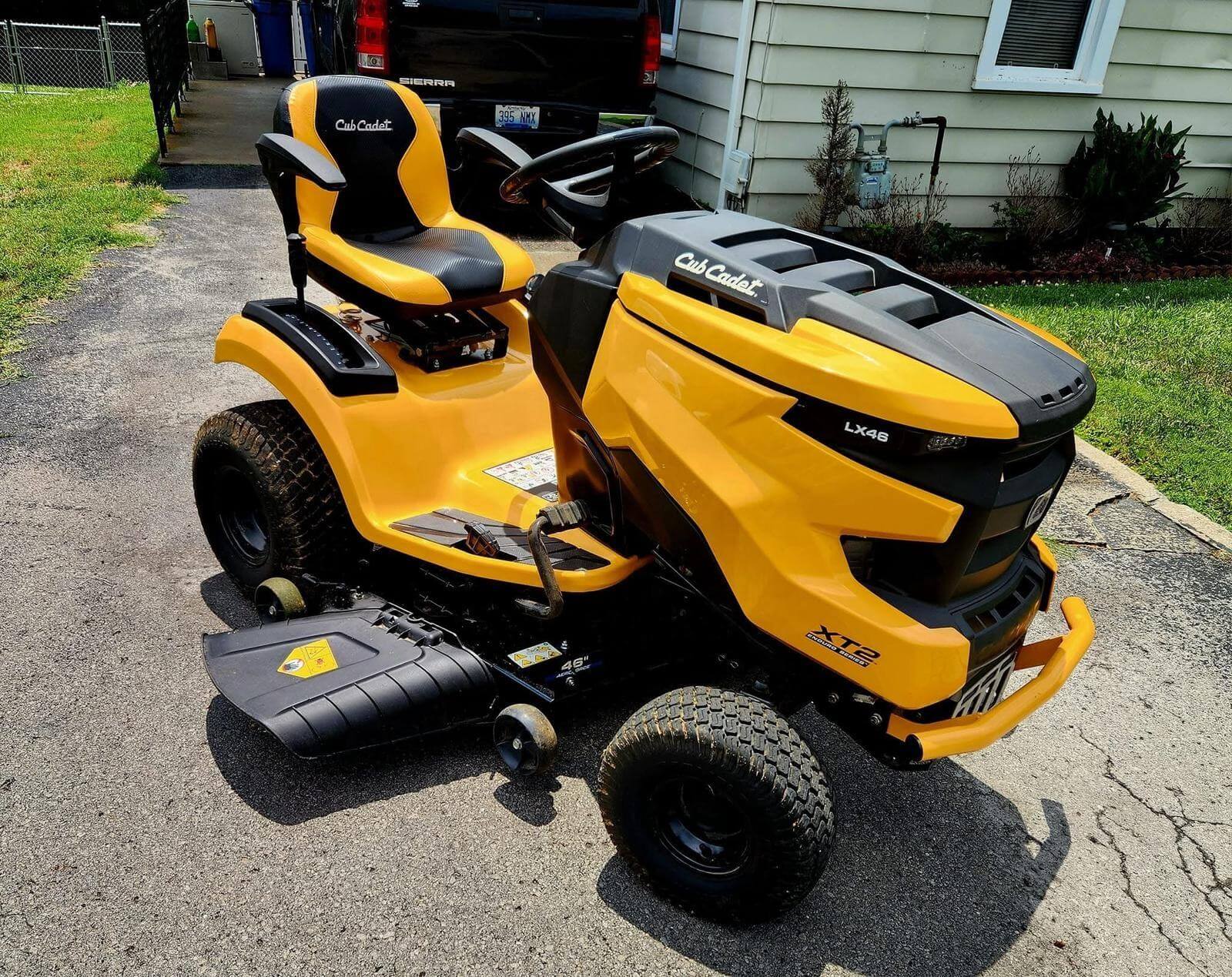
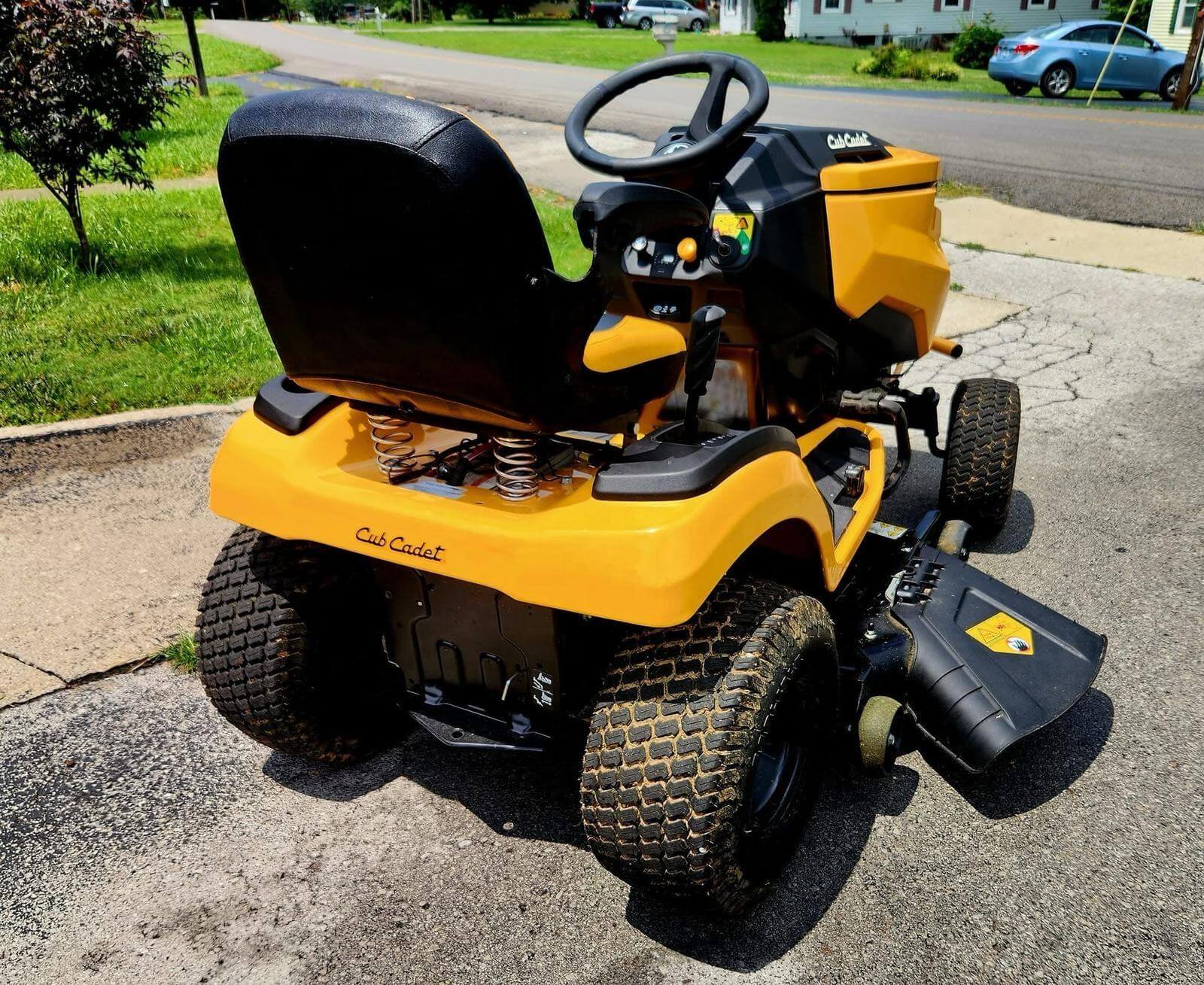
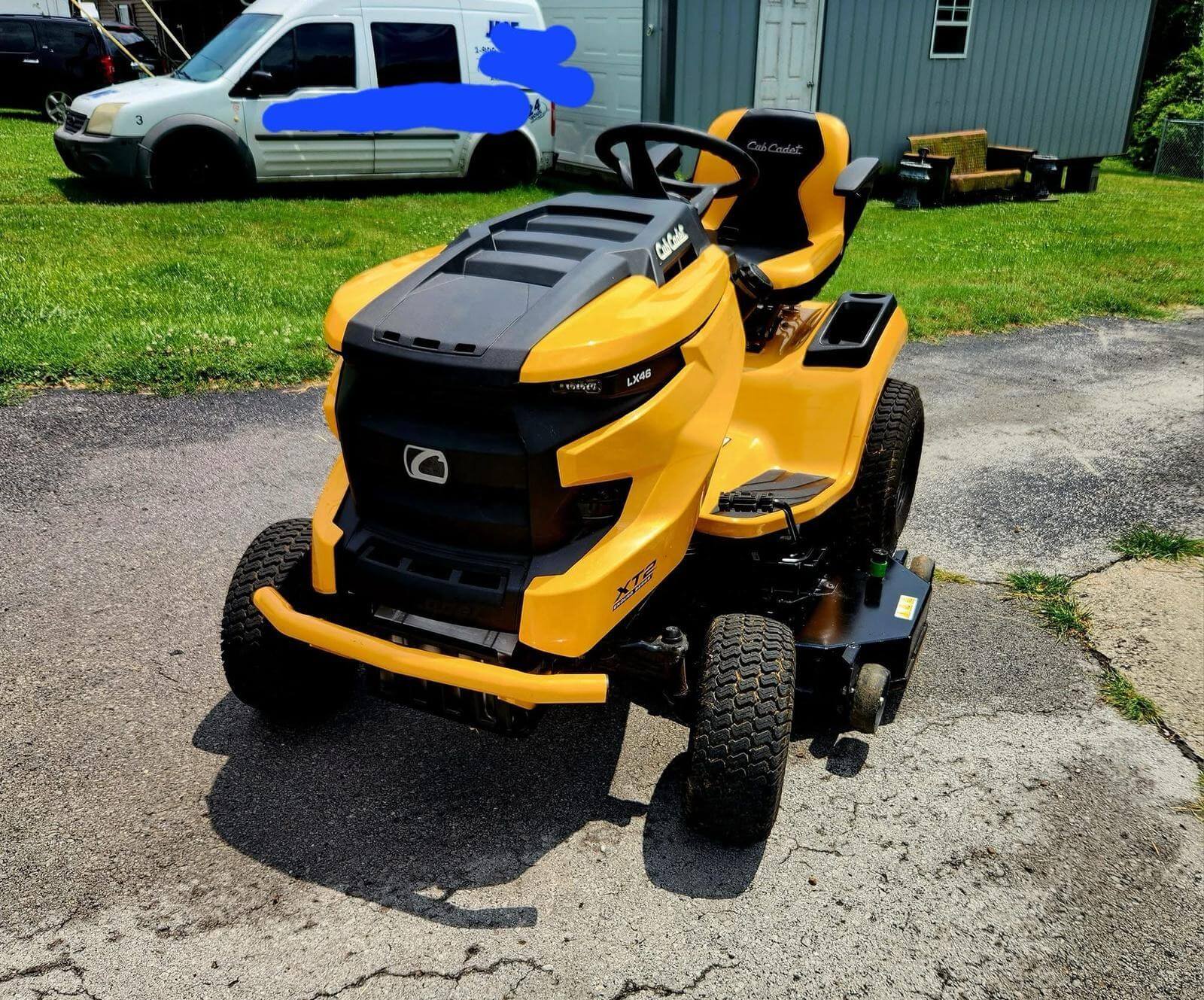
Cub Cadet XT1 For Sale — $3,000, Best Riding Mower for Hills
The Cub Cadet XT1 for sale at Farmers Equipment is priced at $3,000 — a proven residential riding lawn mower with rear-wheel drive, 18–24 HP engine options, and a traditional steering design that handles slopes where most zero-turns can’t safely operate. Best suited to properties up to 2 acres with hills, slopes, or uneven terrain.
👉 Contact us to confirm current stock, photos, and shipping quote →
Cub Cadet XT1 — Full Specifications
| Specification | Details |
|---|---|
| Engine options | Kohler 5400 Series or Kawasaki — 18–24 HP |
| Cutting deck options | 42″, 46″, 50″ |
| Cutting height | 1″–4″ (7 positions) |
| Ground speed | 5.5 mph forward / 3 mph reverse |
| Transmission | Hydrostatic (ELT models) or manual (LT models) |
| Drive system | Rear-wheel drive — superior slope traction |
| Fuel tank | 3 gallons |
| Weight | ~440–500 lbs depending on configuration |
| Turning radius | 16″ |
| Warranty (new) | 3-year limited residential warranty |
| Price | $3,000 — worldwide shipping available |
Is the Cub Cadet XT1 a Good Mower?
Yes — the XT1 is consistently rated one of the best residential riding mowers in its price class, particularly for properties with hills. Three reasons it earns that reputation:
- Rear-wheel drive — the XT1’s RWD system maintains traction on slopes up to 15° where front-wheel drive alternatives and most zero-turns lose grip. This is the machine’s defining practical advantage
- Kohler / Kawasaki engine reliability — both engine options used in the XT1 have strong long-term reliability records. Kohler and Kawasaki small engines are among the most widely serviced in the US — parts and service are available almost everywhere
- Traditional steering — more intuitive for first-time riders than zero-turn lap bars, and gives better directional control on uneven terrain
The honest limitations: the XT1 is slower than zero-turn mowers on flat ground, and its turning radius is larger. For flat 1–3 acre yards without slopes — a zero-turn like the Husqvarna Z254 cuts 30–50% faster. The XT1 is the right machine specifically when hills or slopes are part of the picture.
Who Makes the Cub Cadet XT1 Engine?
The Cub Cadet XT1 uses engines from two manufacturers depending on the model and year: Kohler (5400 Series — most common) and Kawasaki (FR Series — on some higher-spec XT1 variants). Both are American-brand engines with extensive US service networks. Kohler and Kawasaki small engines are among the most reliable and most easily serviced in the residential mower class — a key practical advantage for long-term ownership.
Cub Cadet itself is a brand owned by MTD Products — one of the largest outdoor power equipment manufacturers in North America, based in Valley City, Ohio. MTD also owns Troy-Bilt and Yard Machines.
How Many Hours Will a Cub Cadet XT1 Last?
A well-maintained Cub Cadet XT1 should deliver 500–800 hours of reliable operation before requiring significant engine or transmission work — equivalent to approximately 10–16 years at typical residential use rates of 50 hours per year.
| Hours | Assessment | What to Expect |
|---|---|---|
| Under 100 hours | Like new — low use | Many years of productive life remaining |
| 100–300 hours | Low to mid — good used buy | Standard inspection — check deck and blade condition |
| 300–500 hours | Mid — viable if maintained | Check transmission smoothness and engine oil history |
| 500–700 hours | High — condition-dependent | Budget for near-term maintenance — belts, blades, possible carb service |
| 700+ hours | Very high — end of typical residential life | Price should reflect remaining life significantly |
Is 500 Hours on a Cub Cadet a Lot?
Yes — 500 hours is high for a residential riding mower. At typical residential use of 40–60 hours per year, 500 hours represents approximately 8–12 years of use. A 500-hour XT1 in good condition can still have useful life remaining, but expect to budget for belt replacement, blade sharpening or replacement, possible carburetor service, and potentially transmission wear on hydrostatic models. Price should reflect this. A 500-hour machine with documented annual service is a better buy than a 300-hour machine with no paperwork.
Is 400 Hours a Lot on a Riding Lawn Mower?
For a residential riding mower — yes, 400 hours is mid-to-high. For context: commercial mowers (Scag, Exmark) are engineered for 2,000–3,000+ hours. Residential mowers like the XT1 are designed for 500–800 hours of total life. A 400-hour XT1 has used approximately half to two-thirds of its expected engine life. Still a viable used buy at the right price, but factor in maintenance costs when negotiating.
Common Problems with the Cub Cadet XT1
| Issue | Details | Severity |
|---|---|---|
| Drive belt wear | Most common issue — deck drive belts wear and slip, especially on models with mulching attachments. Standard wear item — replace every 2–3 seasons or when slipping occurs | 🟡 Minor — inexpensive fix |
| Hydrostatic transmission sluggishness | ELT hydrostatic models can develop slow response or slipping under load on higher-hour units. Check fluid level and condition — often deferred maintenance rather than mechanical failure | ⚠️ Moderate — check before purchase |
| Carburetor issues (ethanol fuel) | Kohler engines on older XT1 units can develop carburetor gumming from ethanol-blend fuel left in the system. Most common on machines stored without fuel stabiliser. Carb clean or rebuild resolves it | 🟡 Minor — preventable |
| Deck engagement cable stretch | PTO engagement cable can stretch over time — deck engagement becomes harder or inconsistent. Adjustment or cable replacement is straightforward | 🟡 Minor — easy fix |
| Rear tyre wear (hill use) | Rear tyres wear faster on sloped properties due to drive traction demands. Worn rear tyres significantly reduce hill performance — the XT1’s main advantage. Check tread depth before purchase | ⚠️ Moderate — critical for hill use |
| Seat switch issues | Safety seat switch can cause intermittent no-start on older units. Common on machines stored outdoors. Inexpensive to replace | 🟡 Minor — easy fix |
What Riding Mower Has the Least Problems?
According to Consumer Reports riding mower reliability data, in the residential riding mower class John Deere and Honda consistently rank lowest for reported problems per operating hour in owner surveys. Cub Cadet XT1 is competitive — its Kohler and Kawasaki engines are reliable, and most reported issues are minor maintenance items rather than serious mechanical failures. The brand’s main disadvantage vs John Deere is resale value and dealer network density, not machine reliability.
Cub Cadet XT1 vs XT2 — What Is the Difference?
| Feature | Cub Cadet XT1 | Cub Cadet XT2 |
|---|---|---|
| Series position | Entry to mid-range | Mid to upper range |
| Engine HP | 18–24 HP | 23–25 HP |
| Deck size | 42″–50″ | 46″–54″ |
| Transmission | Hydrostatic or manual | Hydrostatic standard |
| Frame | Stamped steel deck | Fabricated or stamped depending on model |
| Comfort features | Standard seat, basic controls | Improved seat, more adjustment |
| New price | $1,800–$3,200 | $2,500–$4,000 |
| Best for | Budget-conscious buyers, yards up to 1.5 acres | Buyers wanting more power and deck width, 1.5–3 acres |
| Verdict | Best value — XT1 handles most residential needs | Worth the premium for larger yards or heavier use |
For most buyers with yards up to 1.5 acres — the XT1 is sufficient and the price difference is not justified by the XT2’s incremental improvements. For 1.5–3 acre properties or buyers who want the wider deck — the XT2 is worth considering.
How to Tell What Year a Cub Cadet XT1 Is
For independent used market pricing on riding mowers, TractorHouse.com lists current sales. The production year of a Cub Cadet XT1 can be identified from the model number and serial number on the data plate, typically located under the seat or on the frame near the engine:
- Serial number format: the first two digits of the serial number indicate the year of manufacture. For example, a serial number beginning with “1B” indicates 2021 production; “1C” indicates 2022
- Model number lookup: the model number (e.g., 13AQA1CS010) can be entered at the Cub Cadet website or MTD parts lookup to confirm the exact year and specification
- When did the XT1 come out? — the Cub Cadet XT1 series was introduced in 2015 as a replacement for the older LT series. Production has continued annually with incremental updates. Models from 2015–2019 are pre-facelift; 2020+ models have updated styling and some mechanical refinements
Cub Cadet XT1 vs Competitors
| Factor | Cub Cadet XT1 | John Deere E100 | Husqvarna Z254 |
|---|---|---|---|
| Type | Riding mower | Riding mower | Zero-turn |
| Hill performance | ✅ Best in class | Good — RWD | ⚠️ Not recommended above 15° |
| Flat ground speed | 5.5 mph | 5.5 mph | 8+ mph |
| Engine HP | 18–24 HP | 17.5–20 HP | 26 HP |
| Deck | 42″–50″ | 42″–48″ | 54″ |
| Price at Farmers Equipment | $3,000 | $1,500 | $3,599 |
| Best for | Hills, slopes, beginners | Flat yards, budget | Flat 1–3 acres, speed |
Also browse: Toro TimeCutter at $3,500 · Ariens IKON XD at $3,699 · Full lawn mower range →
👉 Contact us to confirm availability, get photos, and arrange shipping →
Frequently Asked Questions: Cub Cadet XT1 For Sale
How much is a Cub Cadet XT1 worth?
$3,000 at Farmers Equipment. New XT1 models retail at $1,800–$3,200 depending on deck size and transmission type. Used XT1 tractors in good condition typically trade for $800–$2,000 on the private market depending on age, hours, and condition. The hydrostatic ELT models hold value better than manual LT versions.
Is the Cub Cadet XT1 a good mower?
Yes — consistently rated one of the best residential riding mowers for hills in its price class. Rear-wheel drive, reliable Kohler or Kawasaki engine, intuitive traditional steering. Honest limitation: slower than zero-turns on flat ground. The right machine specifically when slopes are part of the property.
How many hours will a Cub Cadet XT1 last?
500–800 hours with proper maintenance — approximately 10–16 years at 50 residential hours per year. Maintenance history is more predictive than hours alone. A well-maintained 500-hour machine outperforms a neglected 200-hour one.
Is 500 hours on a Cub Cadet a lot?
Yes — 500 hours is high for a residential riding mower. At 40–60 hours per year, it represents 8–12 years of use. Still viable with remaining life, but budget for belt replacement, possible carburetor service, and transmission check. Price should reflect the hour count.
Is 400 hours a lot on a riding lawn mower?
For a residential mower — yes, 400 hours is mid-to-high. Residential mowers like the XT1 are designed for 500–800 hours total life. A 400-hour machine has used roughly half to two-thirds of expected engine life. Still a viable used buy at the right price with documented service history.
What is the difference between XT1 and XT2?
The XT2 is the step-up model — higher HP ceiling (23–25 HP vs 18–24 HP), wider deck options (up to 54″ vs 50″), hydrostatic transmission standard, and improved seat comfort. Price is $2,500–$4,000 new vs $1,800–$3,200 for the XT1. For most yards under 1.5 acres the XT1 is sufficient — the XT2 is worth the premium for larger properties or heavier use.
Who makes the Cub Cadet XT1 engine?
Kohler (5400 Series — most common) or Kawasaki (FR Series — some variants), depending on model and year. Both are American-brand engines with extensive US service networks. Cub Cadet is a brand owned by MTD Products, based in Valley City, Ohio.
What are common problems with the Cub Cadet XT1?
Most reported: drive belt wear (standard maintenance item), hydrostatic transmission sluggishness on high-hour ELT models, carburetor gumming from ethanol fuel on stored machines, deck engagement cable stretch, rear tyre wear from hill use, and seat safety switch faults. Most are minor maintenance items — not serious mechanical failures.
When did the Cub Cadet XT1 come out?
The XT1 series was introduced in 2015 as a replacement for the older LT series. Production has continued annually with incremental updates. 2020+ models have updated styling and mechanical refinements over 2015–2019 pre-facelift units.
How do I tell what year my Cub Cadet XT1 is?
Check the serial number on the data plate under the seat or near the engine — the first two digits indicate the production year. The model number can also be entered at the Cub Cadet website or MTD parts lookup to confirm the exact year and specification.

Reviews
There are no reviews yet.