You’ve decided that a John Deere 3020 is the right classic tractor for your needs. It’s a legendary machine, but now comes the most pressing question: what is a fair John Deere 3020 price?
There’s no single answer. A 3020 can cost anywhere from a few thousand dollars for a project tractor to over $15,000 for a clean, well-sorted example. That variance comes down to several significant factors.
Every savvy buyer needs to understand these variables to get the machine they need at a price they can afford.
This guide breaks down the John Deere 3020 price by condition, model type, and features, and covers the hidden costs you should budget for. Our goal is to help you negotiate with confidence and invest in a tractor that offers real value for your money.
Ready to see current inventory? Check out our John Deere 3020 for sale.
Why the John Deere 3020 Holds Its Value
Before we talk dollars and cents, it’s worth understanding why the 3020 holds its value so well. As a flagship of John Deere’s “New Generation” tractors, it was a major leap forward in technology and operator comfort. Produced from 1963 to 1972, it was enormously popular, with over 100,000 units built.
This high production number, combined with its legendary durability, means:
- Parts are readily available from suppliers like Steiner Tractor Parts and Yesterday’s Tractors
- Knowledge is abundant, with a large owner base and detailed repair manuals readily available
- Its utility remains high for small farms, hay operations, and homesteads
This combination of history, longevity, and support creates a strong, stable market for the 3020 — which helps protect your investment well after purchase.
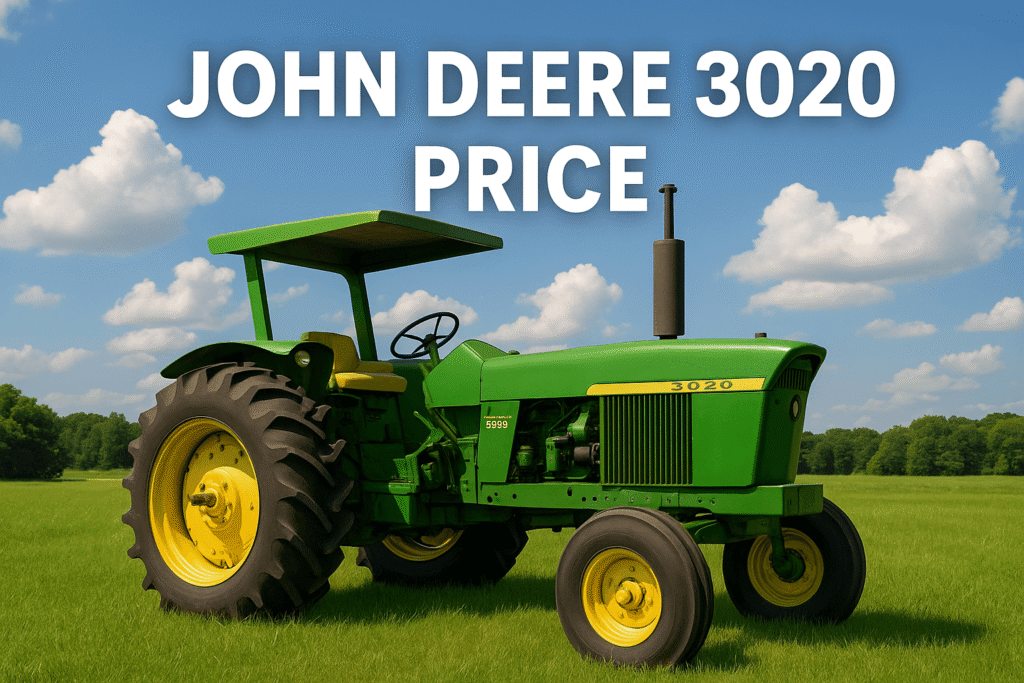
The John Deere 3020 Price Range: From Project to Showpiece
Condition is the single biggest factor in a John Deere 3020’s price. The market generally breaks down into three tiers.
Tier 1: The Project Tractor ($1,500 – $4,500)
A tractor that will need real work to become a reliable daily machine. It may not run, or it may run but not well.
What to Expect: Heavy rust, a non-running engine, major hydraulic or transmission issues (especially a blown Power Shift), poor tires, and possibly missing parts.
Who It’s For: An experienced mechanic, restorer, or buyer looking for a long-term project with strong upside potential.
The Real Cost: The purchase price is just the starting point. A full mechanical and cosmetic restoration can easily exceed $10,000, not counting your own time. Proceed carefully.
Tier 2: The Good/Worker Condition Tractor ($5,000 – $10,000)
The sweet spot for most buyers — mechanically sound and ready to work, but showing its age cosmetically.
What to Expect: The engine starts and runs well with normal smoke. Clutch, transmission, and hydraulics function as expected. There may be minor fluid leaks, worn tires, and faded or patched paint. This is a genuine workhorse, not a showpiece.
Who It’s For: Farmers or homesteaders who need a solid daily machine without paying extra for cosmetics.
The Real Deal: Typically the best value tier. Budget for immediate maintenance like fluid and filter changes, but major repairs shouldn’t be necessary if the tractor checks out.
Tier 3: The Excellent/Restored Condition Tractor ($10,000 – $18,000+)
Here you’re paying for looks and guaranteed performance.
What to Expect: A professionally restored tractor, or one that’s exceptionally original. New or correct paint, good sheet metal, new or nearly-new tires, and well-sorted mechanicals. May come with restoration documentation.
Who It’s For: Collectors, discriminating buyers, or commercial users who want reliability paired with an impeccable appearance.
The Real Cost: High upfront, but should be largely free of hidden expenses going forward with good maintenance.
Key Factors That Directly Affect a John Deere 3020’s Price
Within those tiers, several specific factors move the price up or down.
1. Diesel vs. Gasoline Engine
This is one of the biggest differentiators. The diesel 3020 is the more common and widely sought-after configuration, offering better fuel economy and higher torque. Diesel models often command a premium over comparable gasoline models, although the exact difference depends on condition, hours, originality, and local demand.
2. Transmission Type: The Power Shift Premium
The Power Shift transmission is a genuine productivity upgrade as an option, offering on-the-go shifting under load — well-suited to loader operation and demanding field work. A fully functional Power Shift transmission often increases value compared with an equivalent Synchro Range tractor, while a faulty Power Shift can significantly reduce resale value because of the high cost of repair.
3. Factory Options & Implements
Original equipment can meaningfully add to a package’s value:
- #48 Loader: A complete, functional John Deere #48 loader can add $1,500–$3,000 to the tractor’s value
- Cab: Original aftermarket or factory-style cab installations may add value for buyers seeking weather protection, although collector value often depends more on originality and overall condition than on cab configuration alone
- 3-Point Hitch & PTO: Both should be standard and functional — if either isn’t working, it reduces value
4. Tires: The Hidden Cost
Tires are expensive. A tractor with 80%+ rear tire tread is far more attractive than one with weather-checked, cracked tires at 30%. A new set of rear tires can easily run $1,500–$2,500+ installed. Tire condition should always factor into your offer.
The Hidden Costs of Ownership: Your Post-Purchase Budget
The “John Deere 3020 price” is more than the number on the price tag. Budget for these potential costs to avoid surprises:
- Right-Away Service ($200–$500): Plan on replacing engine oil, hydraulic fluid, filters, and coolant immediately unless the seller has recent receipts.
- Wear Item Replacement ($500–$2,000+): Batteries, tires, gauges, wiring, seat, lights — these add up.
- Major Repair Fund: Your safety net. On any 50-year-old machine, a critical component like the injection pump, hydraulic pump, or transmission can fail. Having $1,500–$4,000 set aside is a good practice.
For a full breakdown of what to inspect and what those repairs typically cost, see our John Deere 3020 Problems guide.
Negotiating a Good John Deere 3020 Price
Do your homework before making an offer — our Tractor Buying Guide covers general strategy for approaching any used tractor purchase:
- Inspect Completely: Use our comprehensive John Deere 3020 Buyer’s Guide [LINK PENDING — awaiting confirmed URL] as your inspection sheet. Document every issue you find.
- Estimate Repair Expenses: Add up the cost to fix everything you’ve found. Use that total as your primary negotiating point.
- Compare the Market: Check recent sold listings on classifieds and auction sites to see what comparable-condition tractors actually sold for — not just what they’re listed for. Auction prices often differ from dealer prices, since dealer machines may include inspections, servicing, warranties, or financing options that auction purchases typically don’t.
- Be Willing to Walk Away: Your strongest negotiating position is being willing to pass on a bad deal. There are plenty of 3020s out there.
Frequently Asked Questions
Q: What is a John Deere 3020 worth?
Value ranges from around $1,500 for a rough project tractor up to $18,000+ for a professionally restored or exceptionally original example, with most well-maintained “worker” condition tractors falling in the $5,000–$10,000 range.
Q: Why are John Deere 3020 tractors so valuable?
The 3020’s high production numbers, strong parts availability, mechanical simplicity, and continued utility for small farms and homesteads all contribute to a stable, active market decades after production ended.
Q: Is a diesel worth more than a gas 3020?
Generally yes — diesel models tend to command a premium due to better fuel economy and torque, though the exact difference depends on condition, hours, originality, and local demand.
Q: Does a Power Shift transmission increase value?
A fully functional Power Shift often increases value compared to an equivalent Synchro Range tractor. However, a faulty Power Shift can significantly reduce value due to the high cost of repair.
Q: What affects the value of a John Deere 3020?
Key factors include overall condition, engine type (diesel vs. gas), transmission type, factory options like the #48 loader, tire condition, and documented maintenance history.
Conclusion: Investing in a Legend
A John Deere 3020 isn’t just an aging tractor — it’s a piece of American agricultural heritage that remains a genuinely capable working partner today. While the upfront John Deere 3020 price can feel intimidating, understanding market rates and the key value factors lets you make a smart, well-reasoned purchase.
Look for a tractor in a condition your budget and mechanical skill level can realistically support. A well-bought “Worker” tier 3020 often delivers the best long-term value — decades of reliable service at a fair price.
Find Your Fair-Priced 3020 Today
Ready to find a reasonably priced John Deere 3020?
Browse our carefully inspected inventory of used John Deere tractors to find a machine that’s been checked over and fairly priced.
View Our Inventory of John Deere Tractors
Not sure the 3020 is right for you? See our full inventory of tractors for sale to compare models and find your best fit. For deeper technical background on this model, see our John Deere 3020 Specs guide.