That sinking feeling when you realize you bought the wrong tractor is something no farmer should experience. This tractor buying guide exists to help you avoid that outcome. Common expensive mistakes include buying a massive 100 HP tractor for a 10-acre property, or assuming a sub-compact tractor can handle 50 acres of rough terrain. These costly errors are avoidable with a bit of upfront planning.
How to Use This Tractor Buying Guide
Choosing the right tractor isn’t about finding the biggest, shiniest, or cheapest machine. It’s about matching equipment to your specific needs, budget, and future plans. This guide breaks the process into clear steps to take the guesswork out of tractor selection.
Whether you’re a first-time buyer or adding to your equipment fleet, this tractor buying guide will help you make an informed decision you won’t regret years later.
Ready to browse? See our tractor inventory. If you’re weighing financing options, see our Tractor Lease vs. Buy guide and our Section 179 Tractor Deduction guide. Already narrowed things down to compact tractors specifically? Check our Compact Tractor Guide.
Step 1: Honestly Assess Your Needs
Understand Your Property and Tasks
Before looking at any tractors, document the following:
Property Details:
- Total acreage and terrain type
- Building and gate measurements
- Storage availability
- Future expansion plans
Task Requirements:
- Primary uses (mowing, tilling, loading, etc.)
- Frequency of each task
- Seasonal variations
- Help available from other equipment
The USDA Natural Resources Conservation Service offers property assessment tools that can help you understand your land’s specific requirements.
The 5-Year Test
Ask yourself: “What will I need this tractor to do in five years?” Many buyers focus only on current needs, but it’s worth accounting for growth. If you plan to expand your operation, buying with future needs in mind — rather than only current ones — can save you from needing to upgrade sooner than expected.
Step 2: Set Your Budget Realistically
Total Cost of Ownership
Every solid tractor buying guide starts with a realistic budget — yours should account for more than the sticker price:
Initial Costs:
- Tractor base price
- Essential implements
- Delivery and setup
- Sales tax
Ongoing Costs:
- Insurance — varies significantly based on tractor value, usage, coverage, and location; commercial farms can pay considerably more than a rough example range would suggest
- Maintenance — roughly $500–$1,200/year as a general example, though usage intensity and tractor size shift this considerably
- Fuel — roughly $1,000–$3,000/year as a rough example, depending heavily on annual hours and tractor size
- Storage — $0–$2,000/year depending on whether you already have suitable space
These are rough illustrative examples for budgeting purposes only — actual costs vary widely by region, usage, and equipment size. Get a specific quote for insurance and expect to refine these estimates based on your own operation.
Hidden Costs to Plan For:
- Implement repairs
- Downtime losses during busy seasons
- Learning curve inefficiencies for new operators
Financing Considerations
Smart financing can meaningfully affect your total cost of ownership. General guidance from the Equipment Leasing and Finance Association and typical lender practices:
- Loan Terms: Typically 3–7 years
- Interest Rates: Vary by credit profile and lender
- Down Payment: Often 10–20% standard
- Tax Benefits: Section 179 deductions may be available — see our Section 179 Tractor Deduction guide and consult your tax professional for specifics
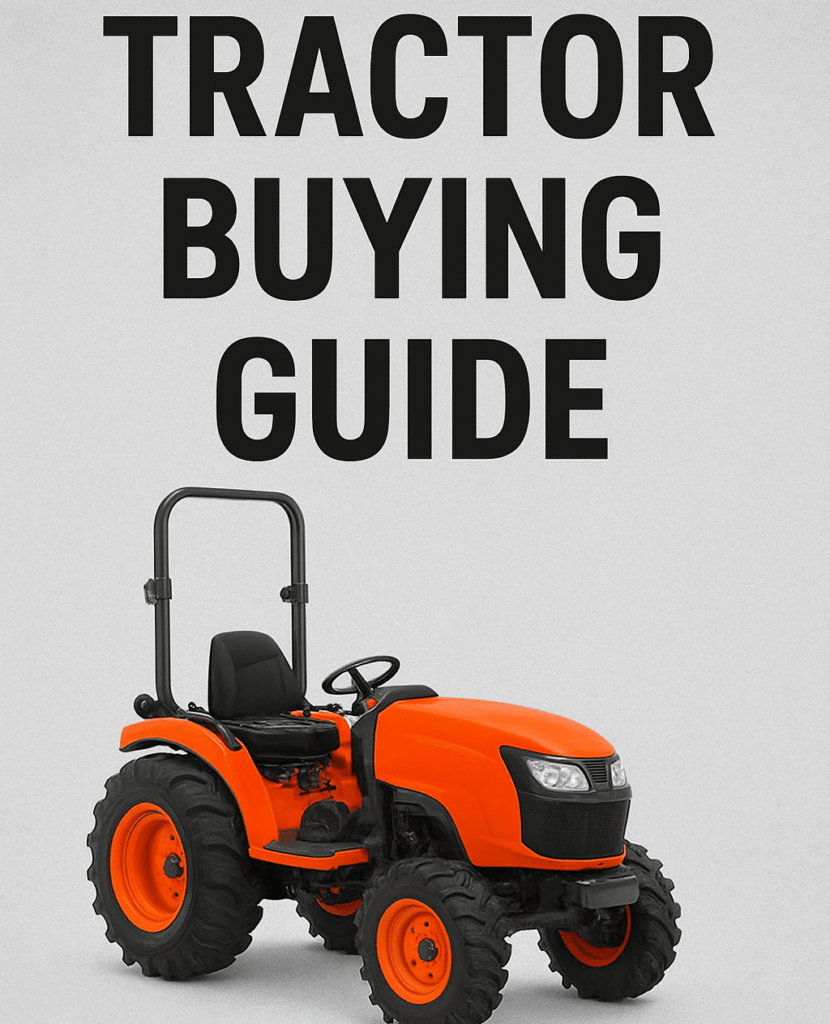
Step 3: Understand Tractor Types and Sizes
Here’s a quick reference for matching property size to typical horsepower needs:
| Property Size | Suggested HP | Tractor Type |
|---|---|---|
| Under 5 acres | 18–25 HP | Sub-Compact |
| 5–20 acres | 25–40 HP | Compact |
| 20–50 acres | 40–60 HP | Compact |
| 50–150 acres | 60–100 HP | Utility |
| 150+ acres | 100+ HP | Utility / Row Crop |
This is a general reference — terrain, task intensity, and implement choice can shift the right HP range for your specific property.
Browse tractors by horsepower and category →
Sub-Compact Tractors (18–25 HP)
Best For:
- Properties under 5 acres
- Light landscaping
- Small gardens
- Limited budgets
Limitations:
- Limited implement capacity
- Not suited to heavy work
- Slower operation
Compact Tractors (25–60 HP)
Best For:
- Commonly suited to properties from roughly 5–50 acres, depending on terrain and workload
- Diverse tasks
- Small farming operations
- Landscaping businesses
Advantages:
- Good power-to-size ratio
- Extensive implement options
- Strong versatility
Utility Tractors (approximately 60–150+ HP)
Best For:
- Large properties
- Commercial farming
- Heavy construction work
- Large-scale operations
Considerations:
- Higher operating costs
- More storage space needed
- Requires more operator experience to run safely
Step 4: Evaluate Key Features
Power and Performance
Prioritize the following when comparing options:
Engine Power:
- Match HP to your heaviest regular task
- Consider your PTO horsepower requirements
- Factor in altitude if you’re farming at elevation, since it can affect engine performance
Hydraulic System:
- Flow rate (GPM) needed for your implements
- Number of remotes needed
- Loader capacity requirements
Transmission Options
Manual Transmission:
- Lower cost
- Generally better fuel efficiency
- Requires more operator skill
Hydrostatic Transmission:
- Easier to operate
- Well-suited to loader work
- Can be more expensive to repair if major transmission components fail
PowerShift Transmission:
- Allows gear changes under load with minimal interruption in power delivery
- Strong productivity for demanding work
- Highest upfront cost
Step 5: Consider Implements and Attachments
Essential Starter Implements
- Loader: For material handling
- Box Blade: For grading and leveling
- Rotary Cutter: For brush management
- Post Hole Digger: For fencing
Implement Compatibility
Check the following before buying any implement:
- Three-point hitch category
- PTO requirements
- Hydraulic needs
- Weight limitations relative to your tractor’s lift capacity
The American Society of Agricultural and Biological Engineers sets standards that help ensure implement compatibility across brands. See our tractor attachments guide for more on planning your full implement setup.
New vs. Used Tractor
One of the most common questions buyers face is whether to buy new or used. Both have real advantages, and the right answer depends on your budget, risk tolerance, and how you plan to use the tractor.
New tractors come with full manufacturer warranty coverage, the latest technology, and no unknown history to worry about. You’ll pay a premium for that certainty, and the tractor will see its steepest depreciation in the first few years of ownership.
Used tractors can offer meaningful savings compared with comparable new equipment, although the difference varies depending on age, hours, condition, and market demand. They still deliver years of reliable service if properly maintained and inspected. The tradeoff is unknown history unless documented service records are available, and any remaining warranty coverage will typically be shorter or nonexistent.
Many buyers find a middle ground works well: a lightly used tractor in the 1–3 year range that has already absorbed the steepest depreciation hit while still offering most of its useful life and, in some cases, remaining manufacturer warranty. Whichever route you choose, a thorough inspection — or a documented service history for used units — matters more than the new-vs-used decision itself. For a deeper look at how value changes over time, see our Tractor Depreciation guide.
Step 6: Research Brands and Dealers
Brand Considerations
Established Brands:
- Generally stronger resale value
- Wider dealer networks
- Long track record of reliability
Value Brands:
- Lower initial cost
- Improving build quality
- Growing dealer networks
Evaluate the Seller
Assess any seller — whether that’s us or another source — on:
Service Support:
- Technician qualifications
- Parts availability
- Response time for service requests
Support Services:
- Delivery options
- Financing options
- How warranty claims are handled
- Customer reviews and reputation
Step 7: The Test Drive Checklist
Comfort and Usability
- Ease of entry and exit
- Control layout
- Visibility from the seat
- Seat comfort over extended use
Performance Testing
- Loader operation
- Transmission smoothness
- Hydraulic response
- Turning radius
Step 8: Understand the Purchase Process
Negotiation Tips
- Research fair market prices before making an offer
- Consider package deals over buying components separately
- Ask specifically what implements are included
- Negotiate delivery and setup as part of the deal
Final Checklist Before Signing
- Review warranty terms carefully
- Understand service requirements to maintain that warranty
- Get all promises in writing
- Verify financing terms match what was discussed
Don’t Overlook Tractor Safety
Safety should be part of every buying decision. When comparing tractors, look for features such as:
- ROPS (Roll-Over Protective Structure)
- Seat belt
- PTO shielding
- Good operator visibility
- Modern lighting if you’ll be working before sunrise or after sunset
Even the most capable tractor isn’t the right choice if it lacks the safety features your operation actually needs.
Plan for Maintenance From Day One
Every tractor requires routine servicing. Before buying, confirm the availability of filters, fluids, replacement parts, and qualified service in your area. Keeping up with scheduled maintenance helps maximize both reliability and resale value down the line.
Common Mistakes to Avoid
The “Too Much Tractor” Error
Buying more machine than you need typically leads to:
- Wasted money on unused capability
- Storage issues
- Higher operating costs
- Difficulty maneuvering on smaller properties
The “Too Little Tractor” Mistake
An underpowered tractor typically causes:
- Constant strain on the equipment
- Inability to complete certain tasks
- More frequent repairs
- Premature need for replacement
Frequently Asked Questions
How much horsepower do I actually need?
It depends primarily on your property size and heaviest regular task. As a rough guide: under 5 acres typically needs 18–25 HP, 5–50 acres typically needs 25–60 HP, and larger commercial operations typically need 60–150+ HP. Match horsepower to your most demanding regular task rather than the biggest job you might occasionally face.
Should I buy new or used?
New tractors offer warranty coverage and the latest technology at a higher price. Used tractors offer meaningful savings with a solid track record if properly inspected and maintained. See the “New vs. Used Tractor” section above for a fuller breakdown.
The Bottom Line: Smart Tractor Selection
Choosing the right tractor requires honest self-assessment, thorough research, and careful planning. This tractor buying guide provides the framework, but your specific situation will determine the best choice.
The perfect tractor is the one that disappears into your workflow — becoming a reliable partner rather than a constant source of attention or frustration. Take your time, ask questions, and don’t rush the decision.
Buyers who carefully match horsepower, size, and implements to their actual workload often report higher long-term satisfaction than those who simply purchase the largest tractor within their budget.
Ready to Find Your Tractor?
Browse our inventory with detailed specifications, or contact us for help narrowing down the right options for your property and budget.