Buying a mini backhoe loader is one of the smartest equipment decisions a farmer can make. Whether you run a small family farm or a mid-size operation, this compact machine can do things that would otherwise require several pieces of equipment — or countless hours of manual labor.
From digging trenches to moving earth, a mini backhoe loader saves time and money while maximizing efficiency. With so many models and price points to choose from, though, how do you pick the right one for your farm?
In this guide, we’ll cover:
- What a mini backhoe loader is
- The most important features to look for
- Cost breakdowns (new vs. used)
- Top brands worth considering
- Tips for buying the right model
- FAQs farmers commonly ask before buying
Want to shop now? Browse our Mini Backhoe for Sale listings.
Which Backhoe Tier Is Right for You? A Quick Comparison
| Tier | Digging Depth | Weight | Typical Price | Best For |
|---|---|---|---|---|
| Miniature Backhoe | 3–6 feet | 1,000–1,500 lbs | $2,000–$8,000 | Hobby farms, DIY, light landscaping |
| Mini Backhoe Loader | 5–10 feet | 2,500–8,000 lbs | $5,000–$50,000+ | Small to medium farms |
| Small Backhoe Loader | 8–12 feet | 6,000–12,000 lbs | $15,000–$35,000 | Farms, contractors, landscaping companies |
This guide focuses on the Mini Backhoe Loader tier. If you need something smaller and lighter-duty, see our Miniature Backhoe guide. If you need more digging depth and power, see our Small Backhoe Loader vs. Tractor Attachments comparison.
What Is a Mini Backhoe Loader?
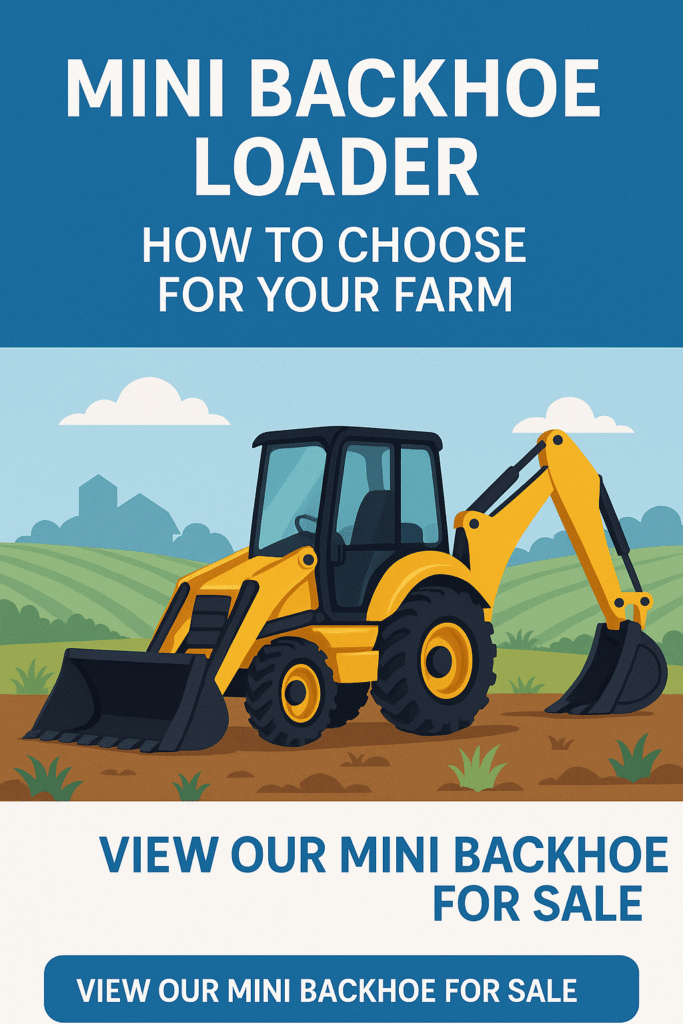
A mini backhoe loader is a smaller version of a standard backhoe loader, used for landscaping, farm work, and small construction jobs. It’s two machines in one:
- A front loader bucket to lift, transport, and move soil, compost, or gravel
- A rear backhoe arm for digging foundations, planting trees, or trenching
Thanks to its compact size, a mini backhoe loader can fit into narrower spaces while still delivering solid power for farm tasks.
Key specifications:
- Digging depth: 5–10 feet
- Lifting capacity: 1,000–2,500 lbs, depending on model
- Weight: 2,500–8,000 lbs
- Engine: Typically 20–60 HP
Why Farmers Invest in Mini Backhoe Loaders
Mini backhoe loaders are becoming more common on farms worldwide. Here’s why:
- Versatility: Trenching, hauling, planting, fencing, and more in one machine
- Affordability: Less costly than larger backhoes or excavators
- Efficiency: Saves time and reduces labor costs
- Accessibility: Easier for new operators to learn
- Compact size: Fits through gates, barns, and narrow farm trails
Many owners report that a well-utilized mini backhoe loader can pay for itself within the first year or two of ownership, though this depends heavily on how frequently it’s used.
Weighing this against equipping your existing tractor with a backhoe attachment instead? See our full Small Backhoe Loader vs. Tractor Attachments comparison for a detailed breakdown of cost, power, and versatility differences.
Features to Consider Before Buying
Digging Depth
- Light farm jobs: 5–6 feet is usually enough
- Larger farms: 7–10 feet for deeper trenching needs
Engine Power (Horsepower)
- Small farms: 20–30 HP is typically sufficient
- Mid-sized farms: 35–60 HP for added lifting strength
Lifting Capacity
Consider what you’ll carry most often — soil, hay, gravel. Models with 1,500–2,500 lb capacity handle most farm jobs comfortably.
Attachment Compatibility
Check for compatibility with augers, blades, trenchers, and post-hole diggers if you anticipate needing them.
Fuel Efficiency
Diesel engines are standard on most models. Actual fuel consumption varies significantly depending on engine size, hydraulic workload, terrain, and operating conditions — check hourly fuel consumption figures for the specific model to help estimate ongoing operating costs.
Size and Maneuverability
Make sure the machine can pass through your farm gates, narrow roads, and storage barns before you buy.
Cost Breakdown of Mini Backhoe Loaders
Pricing varies by brand, condition, and size.
Used Models:
- Lesser-known brands: $5,000–$8,000
- Established brands (Kubota, John Deere): $8,000–$15,000
New Models:
- Imported entry-level models: roughly $10,000–$20,000
- Established brands (Kubota, John Deere, Case): roughly $25,000–$50,000+
Common Attachments:
- Augers: $500–$900
- Buckets: $300–$600
- Snow blades: $700–$1,000
These figures are general market ranges — contact us for current pricing on specific models. For a broader market reference, see current listings on MachineryTrader.
Mini Backhoe Loader Brands for Farmers
Some of the most widely recognized brands in this category include:
- Kubota — Known for excellent parts support and strong resale value, making it a lower-risk long-term investment even as the machine ages.
- John Deere — Backed by an extensive dealer network, which means faster service turnaround and easier parts sourcing in most regions.
- Case — Recognized for strong hydraulic performance, a real advantage if you’ll be running heavier attachments or digging in tougher soil conditions.
- Mahindra — Offers competitive pricing for smaller operations that want solid capability without the premium-brand price tag.
Buying a well-known brand generally means better parts access and a longer practical service life.
Real-Life Farm Uses of Mini Backhoe Loaders
- Irrigation Projects: Excavating trenches for water lines, saving days of hand-digging
- Fencing Installation: A mini backhoe with an auger attachment drills post holes quickly
- Land Preparation: Grading ground and prepping land for seeding
- Material Handling: Loading compost, hay, gravel, and feed becomes much faster
- Small Construction: Building sheds, barns, or drainage systems
Should You Buy New or Used?
Buy Used If:
- You’re working with a limited budget
- Your planned annual use is light to moderate
- You’re mechanically confident and comfortable handling occasional repairs
Buy New If:
- Financing terms and predictable payments matter to you
- You’ll be using the machine commercially or very frequently
- A manufacturer warranty is important for your peace of mind
- Downtime would be costly for your operation
Buying Tips for Farmers
- Match size to your farm: Don’t pay for more power than you actually need
- Consider used equipment: A well-cared-for older machine can save you thousands
- Check hydraulics: Look for leaks or sluggish performance during a test
- Plan for hauling: Confirm your truck or trailer can handle the machine’s weight
- Check parts availability: Favor brands with local dealer representation
- Think about resale value: Kubota and John Deere tend to hold value best
Advantages and Disadvantages of Mini Backhoe Loaders
Advantages:
- Reasonably priced relative to full-size equipment
- Multipurpose — one machine handles many tasks
- More convenient to store and transport
- Approachable for beginner operators
Disadvantages:
- Shallower digging depth compared to full-size loaders
- Not suited to heavy commercial construction work
- Attachments come at additional cost
Frequently Asked Questions
Q1: How does a mini backhoe loader differ from a tractor backhoe attachment?
A mini backhoe loader is a standalone, freestanding machine, while an attachment relies on your existing tractor’s hydraulics. See our full comparison guide for details.
Q2: Are mini backhoe loaders suitable for routine farm jobs?
Yes — with proper maintenance, they’re durable enough for regular daily use.
Q3: What’s the typical lifespan of a mini backhoe loader?
With proper maintenance, many mini backhoe loaders provide 4,000–8,000 operating hours or more, which may translate to well over 10 years of service on many farms depending on annual usage.
Q4: Are mini backhoe loaders appropriate for small farms?
Yes — they’re designed with smaller-scale operations in mind.
Q5: Can they handle snow clearing?
Yes, with a snow blade or bucket attachment.
Q6: Do mini backhoe loaders hold resale value?
Yes, particularly branded models with documented service histories.
Q7: How deep can they dig?
Typically 5–10 feet, which covers most farm applications.
Q8: How much do they weigh?
Generally 2,500–8,000 lbs depending on the model, with lighter units towable on standard trailers.
Q9: Do I need special training to operate one?
No special license is required for farm use — standard operator training is sufficient.
Q10: Where can I buy a mini backhoe loader?
From dealers, farm sales, or trusted online sellers. View our Mini Backhoe for Sale listings.
Last Thoughts – Choosing the Best Mini Backhoe Loader for Your Farm
A mini backhoe loader is a strong choice for farmers looking for a versatile, affordable, and portable machine — useful for irrigation work, fencing, land preparation, and even small construction projects.
When choosing, weigh your farm size, budget, and attachment needs. For most small to medium-sized farms, a mini backhoe loader strikes a solid balance between cost and capability.
Ready to make your choice? Explore our Mini Backhoe for Sale listings today and find the right machine for your farm.